Store Breakdowns · News
Target's Q3 2026 traffic rose 5.0%: what a small store can and cannot use
Target's own release reports 5.0% comparable traffic growth in Q3 2026, a measure of its base rather than independent shops. Traffic breakdowns and the November trend are not verifiable from the sources.
- By
- The Cart Plot Editorial
- Published
- Sources checked
- Evidence
- 4 sources
At a glance
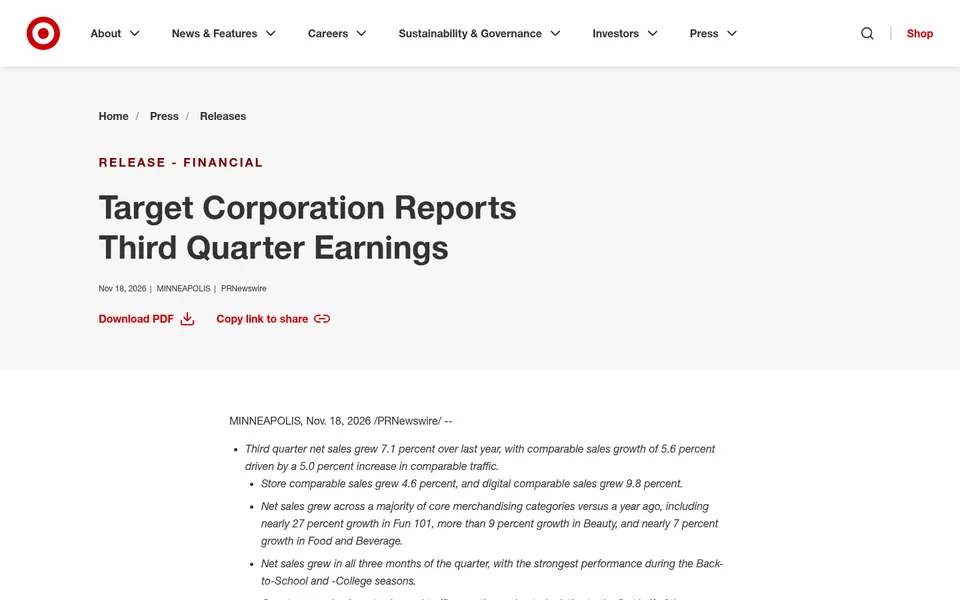
- Target reported a 5.0% increase in comparable traffic for Q3 2026 in its earnings release published on 18 November 20262.
- The 5.0% figure is Target's own measure of its base, so it does not describe the footfall of independent shops2.
- Target's comparable store sales rose 4.6% and comparable digital sales rose 9.8%, but the blended figure does not show how much growth came from each channel3.
- Target has not published traffic by category, region or income group in the sources reviewed, so its 'broad based' description cannot be checked1.
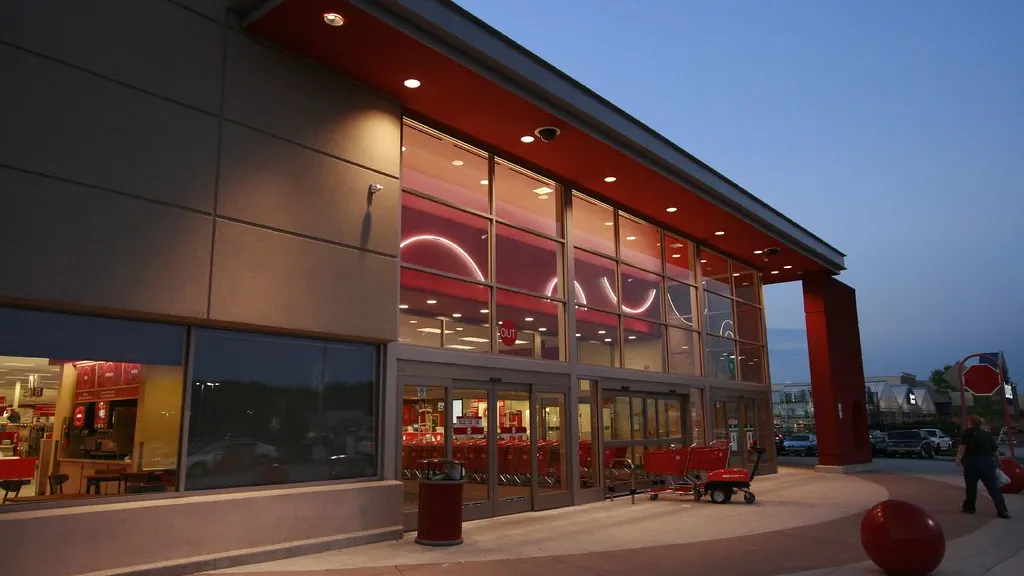
Target's third-quarter comparable traffic rose 5.0%, according to its earnings release published on 18 November 20262. The 5.0% figure is Target's own measure, so it describes Target's base rather than the footfall of any independent shop2. A small store can use it as context for big-retailer demand, but not as a benchmark for its own traffic or conversion before holiday peak.
Target reported 5.0% comparable traffic growth for Q3 2026
Target Corporation published its third-quarter 2026 earnings release on 18 November 2026 through PRNewswire. It reported net sales up 7.1% and comparable sales up 5.6%, "driven by a 5.0 percent increase in comparable traffic"2. The same headline figures appear in the company's Exhibit 99 filed with the U.S. Securities and Exchange Commission3.
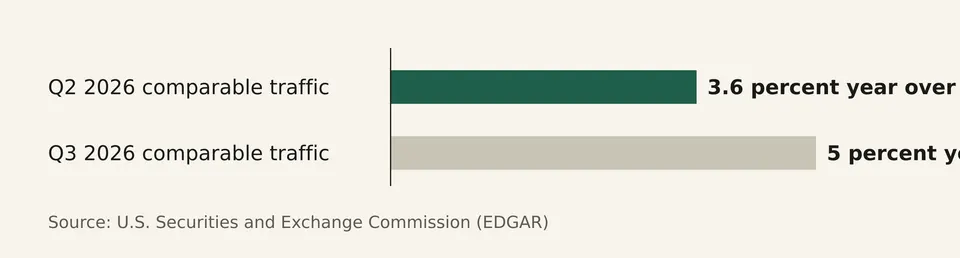
Retail Dive reported the same day that Target's third-quarter traffic grew 5% year over year, after traffic had dropped 2.2% in the same quarter of the previous year1. In the second quarter of 2026, comparable traffic rose 3.6%4, so the third-quarter rate was faster than the one before.
Chief Executive Michael Fiddelke described the traffic growth on a media call as "broad based" across most categories, customer geography and income level1. The release does not break that claim down by category, region or income band, and the sources we reviewed do not either.
How the store and digital channels contributed
The release reports comparable sales as a combination of two channels: "comparable store sales increase of 4.6 percent and comparable digital sales increase of 9.8 percent"3.
Because the two channels grew at different rates, the blended comparable figure does not show how much of the growth came from stores and how much from digital. The store figure describes Target's own locations, not the wider high street or a mall. The sources do not explain how Target counts comparable traffic, so a small store cannot rebuild the 5.0% figure from public data and should not treat it as a benchmark for its own visits2.
What changes for sellers and when
The sources do not announce any rule, fee, platform or policy change for third-party sellers. The items below are Target's own results and plans.
- Target+ marketplace. Non-merchandise sales grew nearly 20%, which the release links partly to "the Target+ marketplace"2. The release does not give a marketplace sales figure.
- Guidance. Target raised its full-year 2026 net sales growth expectation to "a range around 6 percent, one percentage point higher than the prior guidance range1." The guidance excludes any potential future tariff refunds3.
- Capital spending. Target expects to invest between $5 billion and $6 billion in capital expenditures in 20273. One Retail Dive summary describes the plan as "up to $6 billion"1; the release gives a range, so the range is the figure to use.
- Tariff refunds. Third-quarter results include $301 million of pretax tariff refund benefits, which contributed $228 million to net earnings and $0.50 to earnings per share2. These are Target's own results and do not show a cost trend for a small store.
- Categories. Apparel and accessories sales fell about 3.8%, while home furnishings and decor rose 2.5%1.
How a small store can use the signal before peak
Treat Target's 5% as context: a large retailer reported traffic growth in the quarter1. It is not evidence about your own traffic or conversion rate. Target also said that "Month-to-date, November net sales are in line with the Company's guidance and expectations, accelerating from October sales trends"2. That is a company statement, not a forecast for your store.
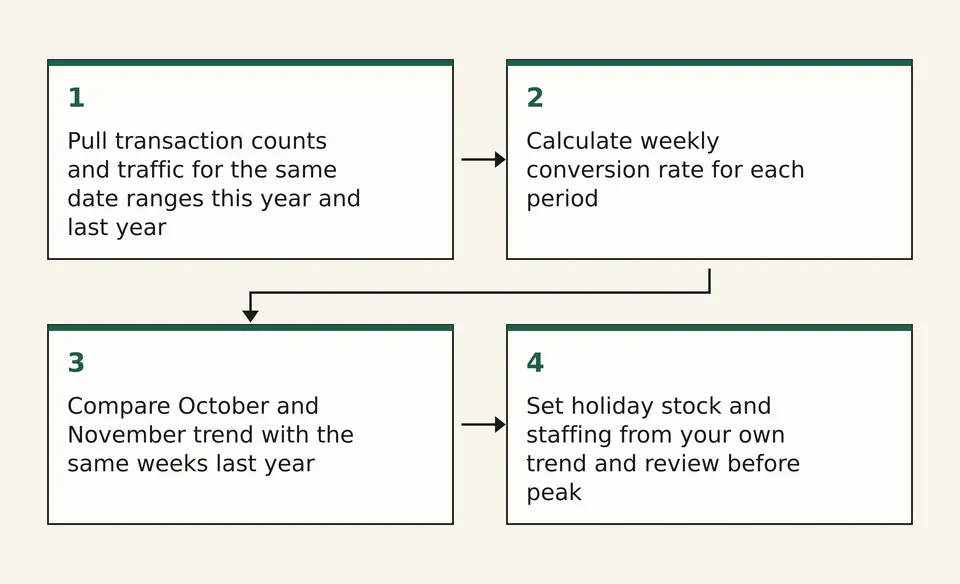
The useful question is whether your own numbers are moving. A four-step check uses data most stores already hold:
- Pull transaction counts and traffic for the same date ranges this year and last year.
- Calculate weekly conversion rate for each period.
- Compare the October and November trend with the same weeks last year.
- Set holiday stock and staffing from your own trend, and review before peak.
Keep the same date ranges for both years. If a change in traffic is concentrated in one product category, one channel or one customer group, Target's aggregate figure cannot show that for your store, so check the split in your own reports.
What is not yet known
- Target has not published traffic by category, region or income group in the sources we reviewed, so the "broad based" description cannot be checked from the release alone.
- The sources do not include November results for Target or any other retailer, so the November acceleration remains a company statement.
- The sources do not say how the 2027 capital spending will be divided between new and existing stores, or where any new stores will be.
- It is not known whether fourth-quarter traffic will match the third-quarter pace, or whether tariff refunds will recur. The guidance excludes future refunds3.
- The sources do not compare Target's traffic trend with other retailers in the same quarter. For another retailer's comparable figures, see our Home Depot vs Lowe's: what their Q3 2026 online growth figures measure article.
Questions readers ask
Does Target's 5.0% traffic figure show what will happen to my store's traffic?
No. The 5.0% is Target's own comparable traffic measure and describes its base rather than any independent shop's footfall2. A small store should check its own transaction counts and weekly conversion rate for the same date ranges2.
How did Target's third-quarter traffic compare with earlier periods?
Retail Dive reported that traffic grew 5% year over year after dropping 2.2% in the same quarter of the previous year1. Comparable traffic had risen 3.6% in the second quarter of 20264.
Did Target announce any new rules or fees for third-party sellers?
The sources do not announce any rule, fee, platform or policy change for third-party sellers. The release does say non-merchandise sales grew nearly 20%, which it partly links to the Target+ marketplace, but gives no marketplace sales figure2.
What is still unknown about Target's trading?
The sources do not include November results for Target or other retailers, so the November acceleration remains a company statement2. It is also not known whether fourth-quarter traffic will match the third-quarter pace or whether tariff refunds will recur3.